request a call back

in the UK, just as many people listen to radio as use social media
This blog is about spheres of influence and champions radio. It is not about dismissing social media as a channel. After all, radio brands and famous presenters are on social media, whilst Facebook, Instagram, Reddit and TikTok are not on the radio.
not so quiet Social Revolution
In the last 15 years social media has been seen as the not so quiet revolution that has taken over customers in customer engagement and proves a fertile breeding ground for brands to pick up new business.
Whilst with growth comes more competition, higher prices and a medium where brands have to fight for attention space in a crowded channel.
Social media is remarkable
What is trending today is promptly forgotten tomorrow, but the beauty of Socials is the wake-a-mole effect of new personalities replacing the old in an ever-repeating process of what goes viral gets noticed.
Consumers’ love for everything social is undeniable.
Today’s influencers are yesterday’s news, but there is always a Tsunami of wannabes who will replace them.
• Radio: More UK Listeners Than Facebook, Instagram and YouTube Combined.
But there is also another medium that has more users (we call them listeners) than Facebook, Instagram and YouTube combined in the UK. It exists without the ever-changing face of what goes viral or who said what. It offers SMB advertisers a credible environment firmly anchored in integrity.
it’s called Radio and it is changing the rules.
| Metric / Influence Factor | Radio (UK) | Social Media (UK) |
|---|---|---|
| Audience Reach (UK) | 87% of UK adults weekly (50m people); Global brands reach 29m weekly (RAJAR, Global) | 54.8m social media users in UK (79% of population) (DataReportal, Metricool) |
| ROI | £7.70 return for every £1 spent (Radiocentre / Global) | ROI varies widely; average £2.80–£3.00 per £1 spent (Kantar) |
| Brand Browsing Uplift | +52% increase after radio ad exposure (Radiocentre) | Lower immediate uplift; often needs repeated retargeting (Kantar) |
| Trust in Ads | 61% trust radio ads (Radiocentre / Edelman) | 38% trust social media ads (Edelman Trust Barometer) |
| Active Attention | 58% active attention to radio ads (IPA TouchPoints) | 30–35% attention to feed ads (IPA TouchPoints) |
| Ad Avoidance | Only 16% switch/skip during radio ads (Ofcom Media Nations) | >60% skip or scroll past ads (Kantar) |
radio: Where voices meet and stories live
• For decades, listeners have turned to radio voices they trust.
• Social media is an established part of our lives, but radio has always been the heartbeat of culture and conversation.
• Multiplatform: now there is a change in how radio listeners connect with their favourite stations. It is no longer just live radio but DAX and connected audio.
Radio is the “original influencer” long before digital platforms. No other media has such a special relationship with its audience honed over years of loyal listening. Radio has shaped culture, trends, and public opinion for decades. Advertising on the radio with Global – the home of Brighter has never been more popular.
but which channel really has more influence on audiences — radio or social media?
• Radio: the heartbeat of your audience
UK Audience Reach
Radio has the same audience size as social media in the UK.
• 87% of UK adults weekly (50m people); (Global brands reach:29m weekly (RAJAR, Global)
• 8m social media users in UK (79% of the population)
What of demographics?
Using BBC Radio 1 as a neutral radio station, we can compare age, gender, and income.
Demographic Comparison Table
| Demographic | Radio (BBC Radio 1 Example) | Social Media (UK Overall) |
|---|---|---|
| Age Groups | Primarily 15–34 (largest blocks: 15–24 at 36%, 25–34 at 29%) | Broad usage across ages; Ages 13–17: 95%, 18–24: 91%, 25–34: 87%, 35–44: 73%, 45–54: 61%, 55–64: 49%, 65+: 31% |
| Average Age | Approximately 30 years old | Varies by platform; younger skew on TikTok/Instagram, broader on Facebook & YouTube |
| Gender | 52% male / 48% female | Roughly equal: 50.1% male / 49.9% female (18+) |
| Socio-economic | 58% ABC1 | Varies by platform, no consistent overall data |
voices you know, stories you share
So, while audience reach is similar, social media influences 13–17-year-olds to a far greater degree than radio. Just like radio stations, different social media platforms show age, gender and income variations. Whereas radio stations have loyal listeners, social media users are cross-platform.
• There is no loyalty in the social space, platforms come and go as new generations evolve.
UK Social Media Users by Platform – Audience Demographics
| Platform | UK Users (millions) | Key Age Distribution (UK) | Gender Split (UK) |
|---|---|---|---|
| YouTube | 54.8 | 25–34: 23.7%, 35–44: 19.8%, 18–24: 17.9% | Balanced (approx. 50% male / 50% female) |
| 38.3 | 16–24: 49.1%, 25–34: 56.3%, 35–44: 70.6%, 45–54: 69.9%, 55+: 62.1% | Slightly more female (around 52% female / 48% male) | |
| 33.4 | 18–24: 30.1% (largest group), strong 18–34 presence | 57% female / 43% male | |
| TikTok | 24.8 (18+) | 18–24: 32.8%, 25–34: 28.1%, 13–17: 22.3%, 35+: 16.8% | 52% female / 48% male |
| 45 | Largest group: 25–34 (38.1%) | 56% male / 44% female | |
| 15.5 | Strongest among 25–34 (34%), also popular with 35–44 | 70% female / 30% male | |
| 22.9 (adults) | 18–34 heavy | — |
Trust & Credibility
(61% trust radio ads vs 38% for social ads) RadioCentre and Edelman Trust Barometer.
• Consistency, social media influencers come and go, but radio listeners tune in daily foster presenter and brand loyalty.
• How do radio presenters influence audiences? The Power of Personality: Presenters are seen as trustworthy, positive that listeners see as friends
• Cross-platform presence: many presenters now also thrive on social media
If trust and credibility are essential (e.g., finance, healthcare, public information, recruitment), radio advertising has a clear advantage. Social media excels in targeted reach and interaction, but audiences approach ads with more scepticism.
radio and social media: Competing for Growth, or complementing
Radio is growing.
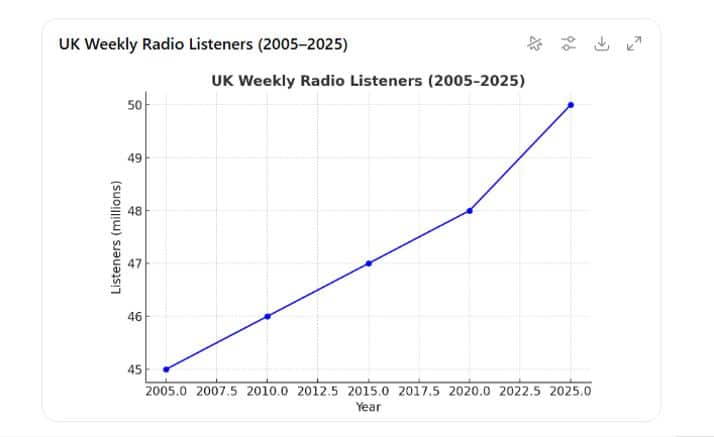
how radio works today
Multimedia Global Player DAX
Radio is no longer an ‘object’. Radio is a multifaceted platform and is accessed through the Global player app and smart speakers. Live radio has catch-up options just like television. Apps combine radio with DAX, offering radio advertisers new tools to engage with and measure their audiences.
Is Radio a Better Influencer than Social Media?
| Factor | Radio Influencers | Social Media Influencers |
|---|---|---|
| Reach (UK) | 50 million adults tune in weekly (89% reach) | 55 million active users across all platforms (80% reach) |
| Trust & Credibility | High – presenters often seen as authentic, long-term voices | Mixed – some influencers trusted, others criticised for paid content saturation |
| Engagement Style | Intimate, habitual listening; relationships built over years | Visual, interactive (likes, shares, comments), high immediacy, high personality turnover |
| Cultural Impact | Historic tastemakers (music, trends, brands); multi-generational influence | Shapes current pop culture trends, especially among Gen Z. Influencer lifespan can be short-lived |
| Consistency of Exposure | Daily, routine listening (commute, work, home) | Irregular; depends on algorithm visibility & user scrolling habits. Can be less controllable commercially |
| Targeting | Regional/geographic targeting; day-part scheduling | Granular demographic & behavioural targeting via ad platforms |
| Costs | Lower production cost (voice + script); scalable budgets | Influencer fees vary widely; can be costly for top creators |
| Measurement | RAJAR data, listener surveys, digital audio analytics | Platform metrics (impressions, engagement, CTR). Statistics can be unreliable. |
| Longevity | Presenters often sustain careers for decades and become household names | Influencer relevance can be short-lived as barriers to entry are low. |
| Perceived Influence | Trusted companion, especially for ABC1 demographics | Strong aspirational pull among younger audiences |
In many key areas, radio is still a stronger influencer than social media.
effective strategies often do not rely on one channel alone
Of course, in an ideal world, the strongest strategies often blend both: using radio to build trust and reach, while leveraging social for conversation and targeting.
- Radio builds trust, credibility
- Social media extends the conversation
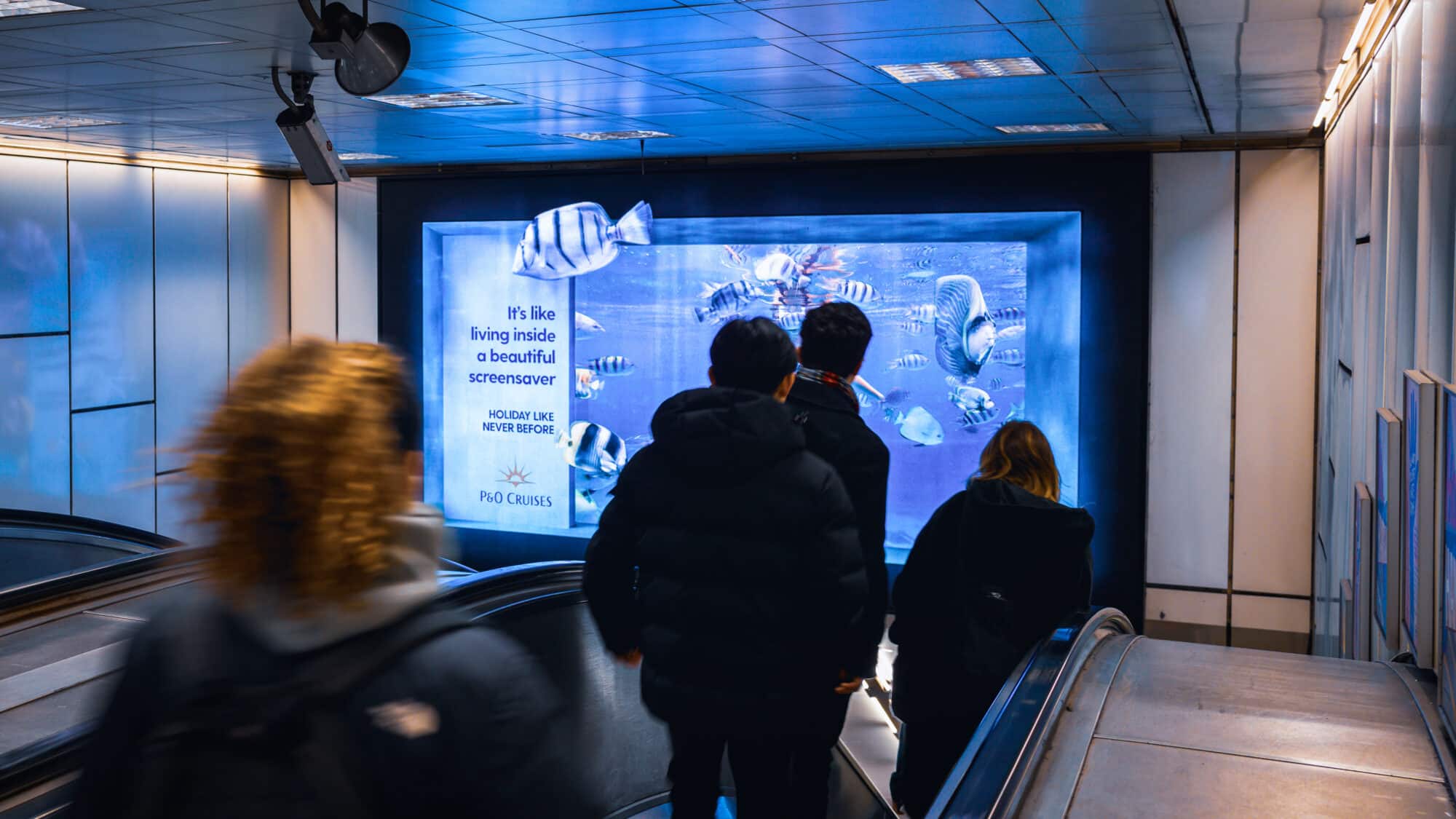
- Buses and Billboards provide visual reinforcement
Fortunately, Global can help you with all of these channels.